"Leashed, registered dogs are allowed from the day after Labor Day to May 1 at any time."
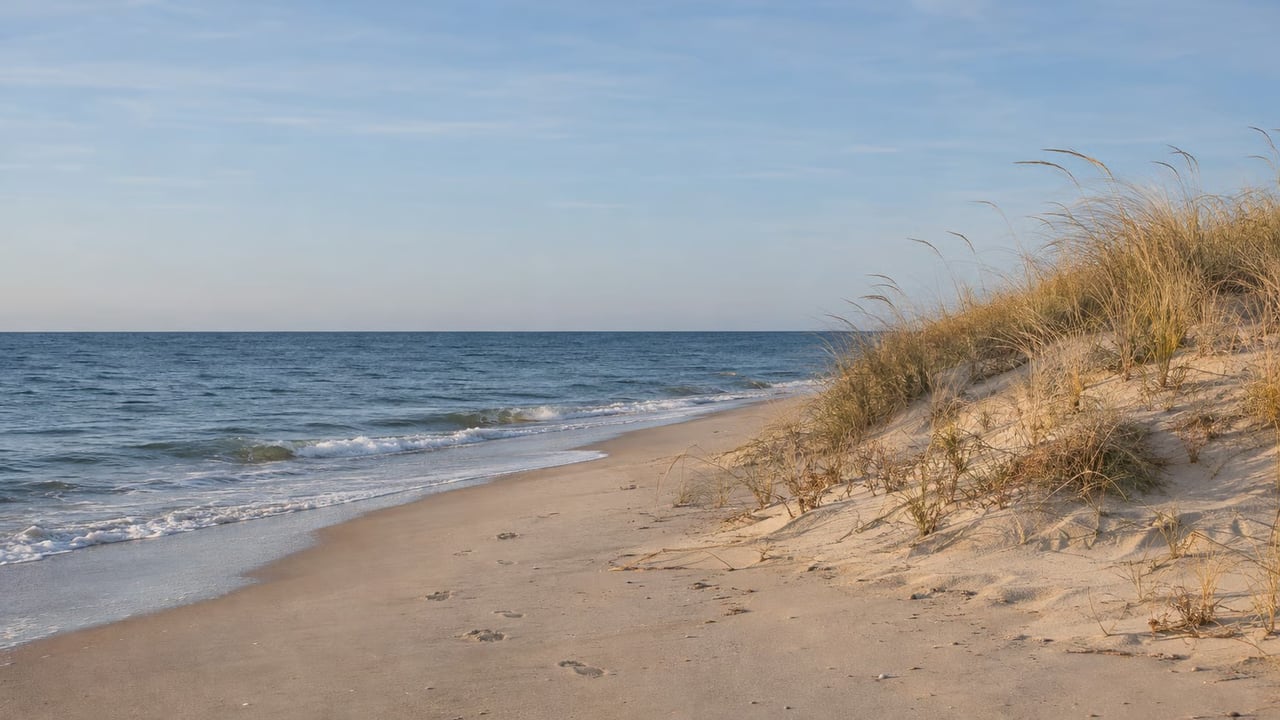
That line is from Town of Westerly Ordinance 76-8, as the Watch Hill Conservancy prints it. That rule has applied since the day after Labor Day, and it decides who uses Napatree Point Conservation Area for the next eight months. Over the summer, the 1.3-mile spit west of the village works around beach traffic. From now until May, the rules favor anyone who walks it on a weekday morning in November, with or without a dog. The Conservancy's own account of last winter shows those walkers also help look after the spit when the weather turns.
The Ten Hours Dogs Get Back
From May 2 through Labor Day, dogs are not allowed on Napatree between 8:00 a.m. and 6:00 p.m. A leashed dog could walk the beach only early in the morning or in the evening. Since the day after Labor Day, those ten daytime hours are open again. A dog can be out at noon on a clear December Saturday or at 2:00 p.m. on a Wednesday, and nobody has to plan around a cutoff.
The basic terms stay the same all year. Dogs must be registered and on a leash at all times. Whoever is holding the leash has to pick up the droppings and take them off the beach. The preserve is open 24 hours a day and charges no entrance fee. The Conservancy's page for this weekend's geology walk points participants to the free parking along Bay Street. The Watch Hill Fire District says off-season visitors are welcome to park in its Bay Street lot at their own risk, and that overnight parking is not allowed.
The rest of the village's summer setup has also shut down. The Flying Horse Carousel's posted 2026 schedule ended with two post-season weekends, September 5 through 7 and September 12 and 13. The ordinance change and the end of the summer season come within days of each other.
If you're planning walks around the ordinance, check the town's current text before relying on any summary of it, this one included. This post is general information, not legal advice.
The Rules That Don't Change Are About Protecting the Spit
The dog hours change with the season. Almost every other rule on the Conservancy's Respectful Enjoyment page applies all year, and each one protects the barrier itself:
- Stay on the paths marked by yellow poles. Crossing the dunes off the approved paths is prohibited.
- No vehicles of any kind, including bicycles.
- No fires, camping, grills or fireworks at any time.
- No drones and no alcohol.
- Entering areas roped off by the U.S. Fish and Wildlife Service for nesting birds is prohibited, and violators may be prosecuted.
- No boats may anchor, moor or beach in the "Kitchen Area" around Napatree Lagoon.
- There are no lifeguards, and visitors assume the risks of being there.
These rules fit what Napatree is. The Conservancy describes an 86-acre site that runs west from Watch Hill into Little Narragansett Bay and is designated a Globally Important Bird Area. Piping Plovers, Least Terns, Osprey and American Oystercatchers are among the listed species connected to it. The dunes hold the spit together whether or not birds are nesting, so the yellow poles matter in February as much as they do in July.
In Winter, the People on the Beach Are the Ones Who Spot Trouble
The Conservancy's spring 2026 newsletter, The Watch Hill Conservator, describes how hard last winter was on the point. It lists snow-covered dunes, frozen tidal flats and wind-sculpted drifts. Record cold, high winds, heavy rain and large snowstorms temporarily cut the Conservation Area off. Drifts blocked the paths, and unstable ice along the lagoon and shoreline at times discouraged anyone from going out at all.
Wildlife had a harder time than walkers did. The same issue explains that snow and ice can bury the wrack lines, mudflats and tidal feeding areas where shorebirds look for worms, crustaceans and insects. Overwash can also reshape the areas that will be used for nesting in spring. Through the winter, staff and advisors keep track of wildlife populations, measure dune elevations and study vegetation to see how storms are changing the barrier.
In January 2025, according to the newsletter, a beach walker on Napatree called the Mystic Aquarium Marine Mammal Rescue Team about what turned out to be a cold-stunned green sea turtle. Cold stunning can happen when water temperatures drop suddenly, usually below 50 degrees Fahrenheit. The newsletter also notes that seals haul out on beaches to rest and are sometimes mistaken for animals in distress. Napatree Point Conservation Area Manager Daniel T. Cole described the Conservancy's part in these cases in the newsletter:
"We're responding because we're there, we have a staff that's trained up, but our main role is communicating with organizations like Mystic Aquarium, the Wildlife Clinic of Rhode Island, Westerly animal control, and we're just the people who can relay information about what's happening on the ground. We are not a rehab organization; we report observations and transport the animal when it's appropriate."
In the Conservancy's account, the process starts when someone on the beach notices an animal and makes a call. With fewer people on the spit between now and May, most of those calls will come from the regulars who are out there in cold weather.
Free Walks on the Conservancy's Calendar Before the Holidays
The Conservancy's late-fall programs are meant for people who live close enough to show up on short notice. All of them are free, all require registration, and the weather can cancel them.
Date | Program | Details |
|---|---|---|
Saturday, Nov. 14, 9:00 to 10:30 a.m. | Uncovering Napatree: A Geological Journey | Led by Dr. Bryan Oakley. Rain cancels it, and the rain date is Sunday, Nov. 15, 9:00 to 10:00 a.m. |
Sunday, Dec. 6 | Bird and Learn | A two-mile bird walk of about 90 minutes for ages 10 and up, with a limited supply of binoculars. Rain cancels it. |
Saturday, Dec. 12, 9:00 to 10:00 a.m. | Natural History Walk | Meets at the Napatree entrance. Open to all ages, and anyone under 18 must come with an adult. Light rain does not cancel it, but a downpour does. |
This Saturday's geology walk ties directly to last winter. Oakley serves on the Conservancy's Science Advisory Team and teaches Environmental Earth Sciences at Eastern Connecticut State University. The walk looks at how longshore drift and major storms keep reshaping the spit, and how its geology helps the barrier hold up against climate impacts. Anyone who saw the paths drifted shut last winter will get an explanation from a scientist of why the sand moves the way it does. The December 12 Natural History Walk meets at the Napatree entrance, and the event listing gives Fort Road as the address.
The Village Gathers on the Ocean House Lawn
The biggest public event of the season is on the hill above the beach. Ocean House announced on November 3 that its Christmas Tree Lighting begins at 4:30 p.m. on Saturday, November 28, the weekend after Thanksgiving. Santa arrives by firetruck, and there are fireworks plus complimentary hot chocolate and Christmas cookies. The event is outdoors, open to the public, and needs no reservation. Guests are encouraged to bring a boxed, unwrapped toy to donate. During the event, access to the hotel's interior is reserved for overnight guests.
Two weeks later comes a smaller event built around local schools. On Thursday, December 10, at 6:00 p.m. in the Seaside Ballroom, Ocean House will show entries from a gingerbread house competition among local high schools, including Westerly and Chariho, and announce the winners at a reception. The event is complimentary, and guests are asked to RSVP.
The calendar runs in order from here. The geology walk is this Saturday, the tree lighting is November 28, the bird walk is December 6, the gingerbread reception is December 10, and the natural history walk is December 12. Leashed dogs are allowed on the beach at any hour through May 1.
If you're wondering how Napatree's year-round access and the village's quieter winter calendar affect what a Watch Hill property is worth to you, The Local Group will walk you through it in plain terms. Schedule a Private Consultation, and we can talk about the village as it is in November, not as it looks in the summer listing photos.